

How Much Coffee Should You Use Per Cup? A Simple Coffee-to-Water Ratio Guide

Have you ever made coffee that tasted too weak, too bitter, or simply different from your favorite café? The secret might be as simple as using the right amount of coffee.
Knowing how much coffee to use per cup is one of the easiest ways to improve your daily brewing routine. Too little coffee can create a weak, watery cup, while too much can produce a brew that feels overly intense.
The good news? You don't need expensive equipment or professional barista skills to make delicious coffee at home. With a simple coffee-to-water ratio, a few basic measurements, and fresh coffee, you can create a cup that suits your taste.
In this guide, we'll explain how much coffee to use for different cup sizes, how to measure coffee in grams and tablespoons, and how to adjust your recipe for drip coffee, French press, pour-over, and other brewing methods.
Coffee-to-Water Ratio Chart
A good starting point for most everyday brewed coffee is a ratio between 1:15 and 1:18. This means using one gram of coffee for every 15 to 18 grams of water.
For a balanced starting recipe, try a 1:17 ratio and adjust according to your preference.
| Water amount | Coffee at 1:17 ratio | Approximate tablespoons |
|---|---|---|
| 6 oz (177 ml) | 10–11 g | 2 tbsp |
| 8 oz (237 ml) | 14 g | 2½–3 tbsp |
| 10 oz (296 ml) | 17–18 g | 3½ tbsp |
| 12 oz (355 ml) | 21 g | 4 tbsp |
| 16 oz (473 ml) | 28 g | 5½–6 tbsp |
| 32 oz (946 ml) | 56 g | 11–12 tbsp |
Measurements are approximate. Tablespoon weights vary with grind size, bean density, and how the spoon is filled. A digital kitchen scale provides more consistent results.
A simple rule to remember: Start with approximately 14 grams of coffee for 8 ounces of water, then adjust the amount to find your preferred taste.
What Is the Best Coffee-to-Water Ratio?
The coffee-to-water ratio describes how much coffee you use compared with the amount of water.
For example, a 1:16 ratio means using one gram of coffee for every 16 grams of water.
Different ratios produce different brewing results:
-
1:15: A more concentrated starting recipe.
-
1:16: A balanced starting point for many brewing methods.
-
1:17: A useful everyday recipe for many coffee drinkers.
-
1:18: A lighter starting recipe.
These ratios are guidelines rather than strict rules. Your ideal recipe depends on the beans, roast, grind size, brewing method, and personal preference.
How Much Coffee Should You Use for Different Cup Sizes?
Not every coffee cup holds the same amount of water. A traditional coffee cup may hold around 6 ounces, while a modern mug can hold 10, 12, or even 16 ounces.
This is why measuring by the word "cup" alone can be confusing.
For a 6-Ounce Cup
Start with approximately 10 grams of coffee and 177 ml of water.
This is a useful starting point for a smaller serving of brewed coffee. Adjust the amount if you prefer a stronger or lighter taste.
For an 8-Ounce Cup
Use approximately 14 grams of coffee and 237 ml of water for a 1:17 ratio.
This is a practical starting recipe for a standard 8-ounce mug.
For a 12-Ounce Mug
Try approximately 21 grams of coffee and 355 ml of water.
Larger mugs need more coffee to maintain the same ratio. Simply adding more water without increasing the coffee can make the finished brew taste weaker.
For a 16-Ounce Travel Mug
Start with approximately 28 grams of coffee and 473 ml of water.
If you like a more concentrated cup, try a slightly higher coffee-to-water ratio. Keep in mind that changing the amount of coffee may also affect extraction and brewing time.
How Many Tablespoons of Coffee Per Cup?
If you don't have a digital scale, you can measure coffee with a tablespoon.
As a rough guide, one level tablespoon of ground coffee may weigh around 5 grams, although the actual amount can vary considerably.
Using that estimate:
-
1 cup of 6 ounces: approximately 2 tablespoons
-
1 cup of 8 ounces: approximately 2½–3 tablespoons
-
1 cup of 12 ounces: approximately 4 tablespoons
-
1 cup of 16 ounces: approximately 5½–6 tablespoons
These are estimates, not exact conversions. Fine grounds, coarse grounds, and different coffee beans can occupy different volumes.
For more consistent coffee, measure by weight whenever possible. A basic digital kitchen scale makes it easier to repeat a recipe and achieve similar results every morning.
How Much Coffee Should You Use for Different Brewing Methods?
Your brewing equipment can influence the best starting ratio. Here are some practical guidelines.
1. Drip Coffee Maker
For automatic drip coffee, start with a ratio between 1:15 and 1:18.
For example, use around 28 grams of coffee for 475 ml of water, then adjust according to taste.
Check your coffee maker's instructions because some machines label a "cup" as approximately 5 or 6 ounces rather than a standard 8-ounce mug.
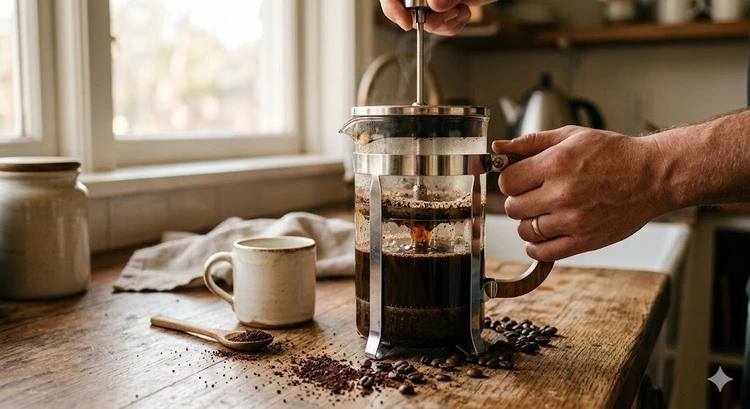
2. French Press
French press coffee often works well with a ratio between 1:15 and 1:17.
Try 30 grams of coarsely ground coffee with 450–510 grams of water. Begin with a coarse grind and adjust the brewing time or grind size if your coffee tastes too weak or harsh.
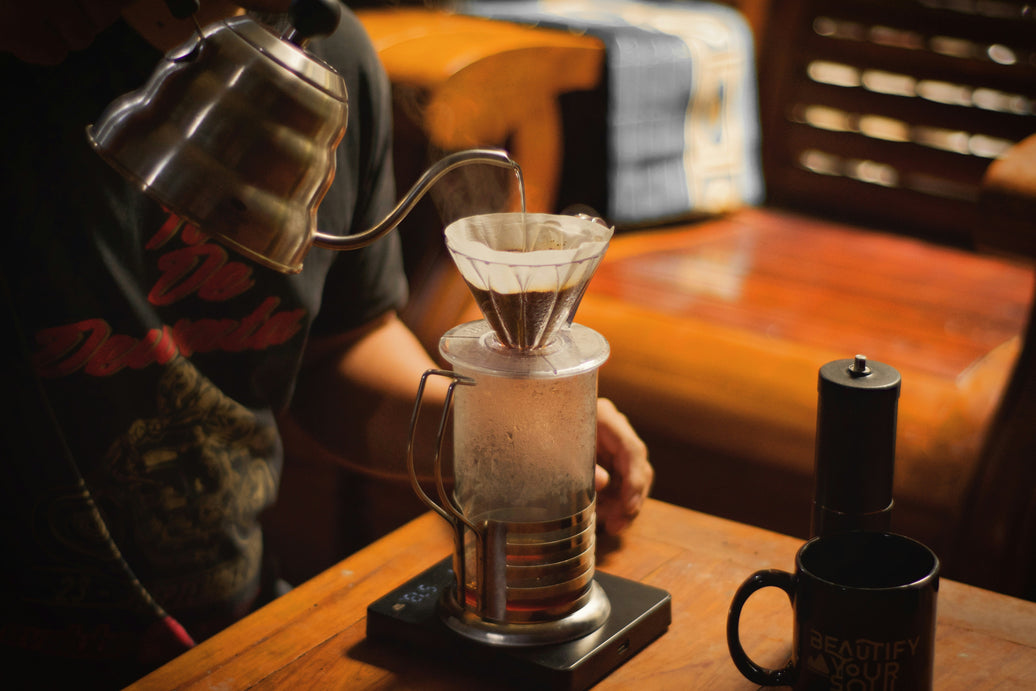
3. Pour-Over Coffee
Pour-over brewing gives you control over water flow, pouring technique, and extraction.
A ratio between 1:15 and 1:17 is a useful starting point. For a single serving, try 20 grams of coffee with 320–340 grams of water.
A consistent pouring technique and an appropriate grind size can help produce a more balanced cup.
4. Cold Brew Coffee
Cold brew recipes vary significantly, especially depending on whether you are making ready-to-drink coffee or a concentrated base.
Follow a recipe designed for your preferred result. If you make a concentrate, dilute it with water or milk according to taste before serving.
Remember that cold brew ratios may not be directly comparable to hot-brewing ratios because steeping time, extraction, and dilution differ.
5. Espresso
Espresso is usually measured by the weight of the ground coffee going into the basket and the weight of the liquid espresso coming out.
For example, a recipe using 18 grams of ground coffee to produce 36 grams of espresso has a 1:2 brew ratio.
This is different from the coffee-to-water ratios used for drip coffee, French press, and pour-over. Espresso also depends heavily on grind size, pressure, and extraction time.
Why Does Your Coffee Taste Too Weak or Too Strong?
If your coffee doesn't taste right, you may not need to change your beans. Start by adjusting your recipe.
If Your Coffee Tastes Weak
Try these adjustments:
-
Increase the amount of coffee slightly.
-
Use a grind size suited to your brewing method.
-
Check whether your brewing time is too short.
-
Measure your water instead of estimating it.
Weak coffee can result from using too little coffee, but it can also be caused by under-extraction.
If Your Coffee Tastes Bitter
Try these adjustments:
-
Use a slightly coarser grind if your current grind is too fine.
-
Check your water temperature and brewing time.
-
Reduce the amount of coffee slightly if the brew is excessively concentrated.
-
Keep your brewing technique consistent while testing changes.
Bitterness can also be influenced by roast level and the natural characteristics of the coffee. It doesn't always mean you are using too much coffee.
If Your Coffee Tastes Sour
Sourness can indicate under-extraction.
Try a slightly finer grind, a longer contact time where appropriate, or a small adjustment to your water temperature. Change one variable at a time to understand what improves the flavor.
Whole Bean Coffee or Pre-Ground Coffee: Which Should You Choose?
Both whole bean and pre-ground coffee can make an enjoyable cup when prepared correctly.
Whole bean coffee allows you to grind just before brewing and adjust the grind size for different equipment. If you use a French press during the weekend and an espresso machine during the week, grinding your beans as needed gives you greater flexibility.
Pre-ground coffee is convenient and saves preparation time. The most important thing is to choose a grind suited to your brewing method and store the coffee in an airtight container away from heat, moisture, and direct sunlight.
Whichever option you choose, measuring your coffee and water consistently can help you get more predictable results.
Simple Tips for Better Coffee at Home
You don't need to complicate your coffee routine to improve the result.
Use fresh, properly stored coffee. Store your coffee in an airtight container away from excessive heat, moisture, and sunlight.
Measure your water. Small differences in water volume can change your coffee-to-water ratio.
Choose the right grind size. Coarse, medium, and fine grounds behave differently during brewing.
Use clean equipment. Old coffee oils and residue can affect the taste of a fresh brew.
Adjust gradually. Change the coffee dose, grind size, or brewing time in small increments until you find the flavor you enjoy.
Write down your favorite recipe. Recording the amount of coffee, water, and brewing time helps you repeat a successful cup.
Frequently Asked Questions About Coffee Measurements
How much coffee do I need for one cup?
For an 8-ounce serving, start with approximately 14 grams of coffee and 237 ml of water using a 1:17 ratio. You can increase or decrease the amount depending on your taste.
Is two tablespoons of coffee enough for one cup?
Two tablespoons may be enough for a smaller 6-ounce serving, depending on how much the grounds weigh. For an 8-ounce serving, approximately 2½–3 tablespoons is a more suitable starting estimate.
What is the golden ratio for coffee?
A commonly used reference is around 1:16 to 1:18, meaning one gram of coffee for every 16–18 grams of water. The best ratio depends on your brewing method and preferences.
Should I measure coffee before or after grinding?
Measure the amount of coffee you intend to brew by weight. You can weigh whole beans before grinding or weigh the grounds afterward, but keep your process consistent to make recipes easier to repeat.
Does more coffee always make stronger coffee?
Adding more coffee relative to water generally produces a more concentrated brew. However, the final flavor also depends on extraction, grind size, water temperature, and brewing time.
How much coffee should I use for four cups?
If your four servings are each 8 fluid ounces, that is approximately 946 ml of water. At a 1:17 ratio, start with about 56 grams of coffee.
Remember that some coffee makers use a smaller measurement for each marked "cup," so check your machine's instructions before calculating the dose.
Final Thoughts: Find Your Perfect Coffee Ratio
Making better coffee at home begins with understanding how much coffee to use per cup. Start with a simple 1:17 ratio, measure your coffee and water, and make small adjustments until you find the flavor you enjoy.
Whether you prefer drip coffee, French press, pour-over, or espresso, a consistent recipe helps you understand your coffee and refine your brewing routine.
At Arvea Coffee, we believe that the little details can make your daily coffee ritual more enjoyable. Choose coffee you love, prepare it with care, and take a moment to savor every sip.
Ready to elevate your everyday coffee ritual? Explore the Arvea Coffee collection and discover your next favorite brew.
Arvea Coffee — Elevate Your Everyday.






















Leave a comment