

How Much Coffee Per Cup? Coffee-to-Water Ratio Guide
Making a great cup of coffee starts with getting the measurements right. Use too little coffee, and your brew may taste weak or watery. Use too much, and the flavor may become overly intense or unbalanced.
So, how much coffee should you use per cup?
A good starting point is 1–2 tablespoons of ground coffee per 6 ounces of water, although weighing coffee in grams gives you more consistent results. Your ideal amount depends on your brewing method, cup size, and personal taste.
In this guide, Arvea Coffee explains coffee-to-water ratios, simple measurements, and practical tips to help you brew a balanced cup at home.
How Much Coffee Should You Use Per Cup?
For a standard cup of brewed coffee, start with approximately 10–12 grams of ground coffee per 6 fluid ounces (177 ml) of water. For a larger 8-ounce mug, try about 13–16 grams.
Use this chart as a starting point:
| Water | Ground Coffee (Approx.) | Suggested Starting Point |
|---|---|---|
| 6 oz (177 ml) | 10–12 g | A smaller cup |
| 8 oz (237 ml) | 13–16 g | A standard mug |
| 10 oz (296 ml) | 17–20 g | A larger serving |
| 12 oz (355 ml) | 20–24 g | A large mug |
| 16 oz (473 ml) | 27–32 g | Two small servings |
These amounts are flexible. Coffee density varies, so tablespoons are less precise than grams. A digital kitchen scale is the easiest way to repeat your preferred recipe.
What Is the Best Coffee-to-Water Ratio?
A coffee-to-water ratio tells you how much coffee to use compared with the amount of water. A useful starting ratio for many manual and drip brewing methods is 1:15 to 1:17.
For example, a 1:16 ratio means using 1 gram of coffee for every 16 grams of water.
| Coffee | Water at 1:15 | Water at 1:16 | Water at 1:17 |
|---|---|---|---|
| 15 g | 225 g | 240 g | 255 g |
| 20 g | 300 g | 320 g | 340 g |
| 25 g | 375 g | 400 g | 425 g |
| 30 g | 450 g | 480 g | 510 g |
| 40 g | 600 g | 640 g | 680 g |
A smaller second number, such as 1:15, means a higher concentration of coffee. A larger number, such as 1:17, means a more diluted brew, assuming other brewing factors remain similar.
Start at 1:16, taste your coffee, and adjust the ratio to suit your preferences.
How Many Tablespoons of Coffee Per Cup?
If you do not have a kitchen scale, tablespoons can be a convenient alternative. As a rough guide, one level tablespoon of ground coffee may weigh around 5 grams, but the actual weight varies with grind size and how tightly the spoon is filled.
| Water | Approximate Ground Coffee |
|---|---|
| 6 oz | 2–2½ tablespoons |
| 8 oz | 2½–3 tablespoons |
| 10 oz | 3½–4 tablespoons |
| 12 oz | 4–5 tablespoons |
Treat these as estimates, not exact conversions. For better consistency, measure coffee by weight whenever possible.
Also remember that a coffee maker's “cup” may mean 5 or 6 ounces rather than the 8 ounces in a typical household measuring cup. Check your machine's markings before measuring.
How Much Coffee Should You Use for Different Brewing Methods?
Different brewing methods use different grind sizes, contact times, and recipes. The following suggestions are useful starting points.
1. Drip Coffee Maker
For automatic drip coffee, begin with a ratio of about 1:16. For example, use 30 grams of ground coffee for 480 grams of water.
A medium grind is a common starting point for drip machines. If your brew tastes too weak, adjust the ratio or grind gradually.
For additional guidance, use our coffee grind size chart for coarse, medium, fine, and espresso.
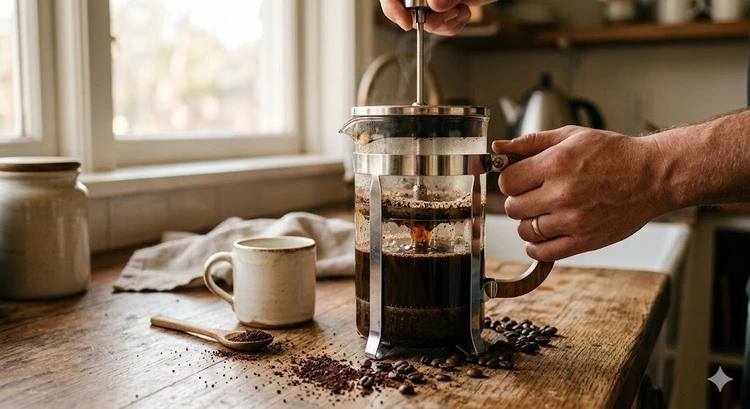
2. French Press
French press coffee often works well with a ratio between 1:15 and 1:17, depending on the recipe and your preferred strength.
Start with coarse grounds and steep for around four minutes, then adjust based on taste. A finer grind or longer steep can increase extraction, but too much extraction may make the cup taste harsh.
Learn more about French roast coffee, its flavor, and brewing characteristics if you are exploring darker-roasted coffee for your French press.
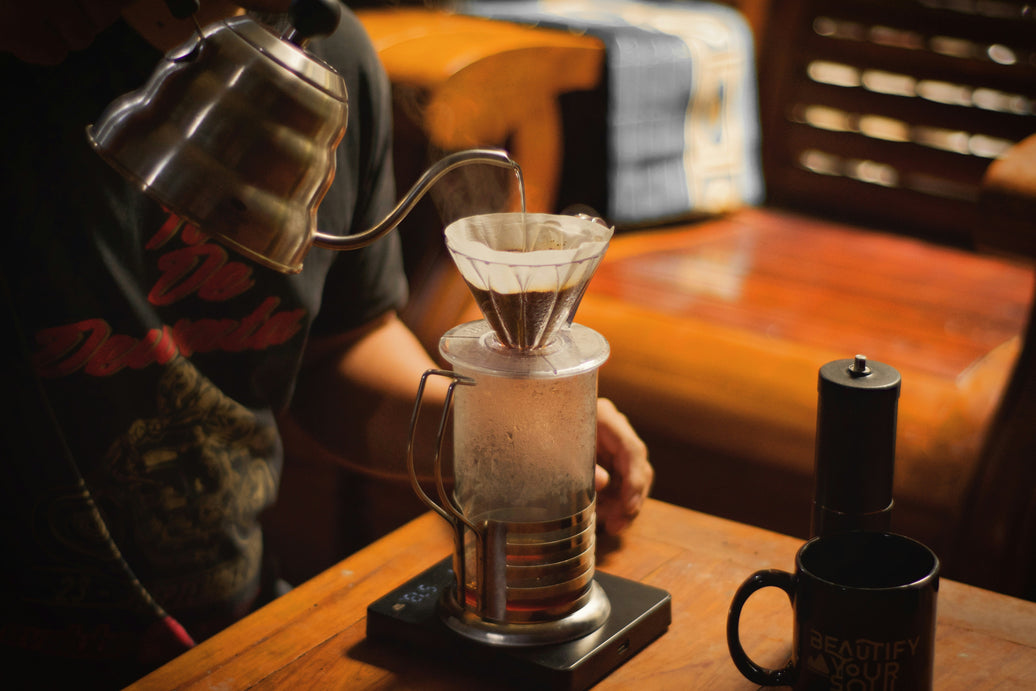
3. Pour-Over Coffee
Pour-over brewing rewards consistency. A 1:16 ratio is a practical starting point for many brewers.
Try 20 grams of coffee with 320 grams of water. Pour steadily and aim for an even extraction. Adjust your grind and pouring technique if the water flows too quickly or too slowly.
4. Espresso
Espresso uses a much more concentrated recipe than drip or pour-over coffee. A common starting point is a 1:2 brew ratio—for example, 18 grams of ground coffee producing approximately 36 grams of espresso.
This is a starting recipe, not a universal rule. Your machine, basket, beans, and taste preferences may call for different settings.
5. Cold Brew
Cold brew recipes vary considerably. A concentrate recipe may use a ratio around 1:5 to 1:8, while a ready-to-drink recipe may be much more diluted.
If you make concentrate, you can dilute it with water or milk after brewing. Follow a tested recipe and adjust it to your taste rather than assuming the same ratio used for hot coffee will work.
How to Measure Coffee Without a Scale
You can still make a good cup without a digital scale. Use the same measuring spoon and cup each time, and keep your measurements consistent.
-
Measure the water before brewing.
-
Add a consistent number of level tablespoons of ground coffee.
-
Use the grind size recommended for your brewing method.
-
Taste the finished coffee.
-
Adjust the amount slightly the next time.
If you like your coffee stronger, try adding a little more coffee. If it tastes too intense, reduce the amount slightly or increase the water.
For a more detailed look at preparing coffee from whole beans, read our beginner's guide to brewing coffee with whole beans.
Why Does My Coffee Taste Too Weak or Too Strong?
The coffee-to-water ratio is important, but it is not the only factor that affects flavor.
Why Does Coffee Taste Weak?
Weak or watery coffee can result from using too little coffee, a grind that is too coarse for your brewing method, or insufficient extraction.
Try using a little more coffee first. If the flavor still seems underdeveloped, adjust the grind or brewing time.
Why Does Coffee Taste Too Strong?
If your coffee tastes overly concentrated, try using slightly less coffee or more water. Remember that a strong-tasting brew is not necessarily over-extracted; concentration and extraction are related but different.
Why Does Coffee Taste Bitter?
Bitterness can be influenced by roast level, extraction, brewing temperature, and other factors. Try a slightly coarser grind or shorter brewing time if you suspect over-extraction.
If you prefer a smoother flavor, explore our guide to the best coffee for people who don't like bitter coffee.
Does Coffee Grind Size Affect How Much Coffee You Need?
Grind size primarily affects extraction and the speed at which water moves through the coffee. It can also affect how much coffee fits into a spoon because fine and coarse grounds have different densities.
For the most consistent results, weigh your coffee rather than relying on spoon measurements. Then choose the grind size that suits your brewing method and adjust it based on flavor.
How to Brew Better Coffee at Home
You do not need complicated equipment to improve your coffee. Start with a few simple habits:
-
Use fresh coffee: Store coffee in an airtight container away from heat, moisture, and direct sunlight.
-
Measure accurately: Use a scale when possible.
-
Choose the right grind: Match the grind to your brewing method.
-
Use suitable water: Clean, good-tasting water helps your coffee taste better.
-
Adjust gradually: Change one variable at a time so you can identify what works.
-
Keep your equipment clean: Old residue can affect the taste of fresh coffee.
Find Your Next Coffee with Arvea Coffee
The right coffee-to-water ratio helps you make a more consistent cup, but the coffee itself matters, too. Explore different coffee options and find a flavor profile that suits your morning routine, afternoon break, or weekend brewing ritual.
Discover the Arvea Coffee collection and choose coffee for your preferred brewing method. Start with a reliable ratio, make small adjustments, and enjoy finding the balance that works for you.
Frequently Asked Questions
How much coffee do I need for one 8-ounce cup?
A useful starting point is 13–16 grams of ground coffee for 8 fluid ounces of water. Adjust the amount to suit your preferred strength.
Is one tablespoon of coffee enough for one cup?
Usually, one tablespoon is less than many people need for a standard mug. Two to three tablespoons may be a more useful starting estimate, depending on the coffee and cup size.
What is the golden ratio for coffee?
A commonly used starting range is 1:15 to 1:17—one gram of coffee for every 15–17 grams of water. The best ratio depends on the brewing method and your taste.
Should I use more coffee for a stronger cup?
Using more coffee relative to water generally produces a more concentrated brew. However, if the coffee tastes harsh or unpleasant, adjusting grind size or brewing time may help more than simply adding coffee.
Does dark roast need more coffee than light roast?
Not necessarily. Roast level affects flavor and bean density, but there is no single rule that darker roasts always need more coffee. Start with your preferred ratio and adjust by taste.
How much ground coffee should I use for four cups?
First check whether your coffee maker defines a cup as 5, 6, or 8 ounces. For 24 ounces of water, a starting ratio of 1:16 calls for approximately 42.5 grams of coffee. Adjust according to your machine's actual water capacity and your preferences.
Final Thoughts
The best coffee measurement is the one that consistently gives you a cup you enjoy. Begin with a 1:16 ratio for many standard brewing methods, measure your water carefully, and make small changes until you find your preferred flavor.
With the right measurements, suitable grind size, and coffee you love, a better everyday cup is within reach. For more Visit www.Arveacoffee.com





















Leave a comment